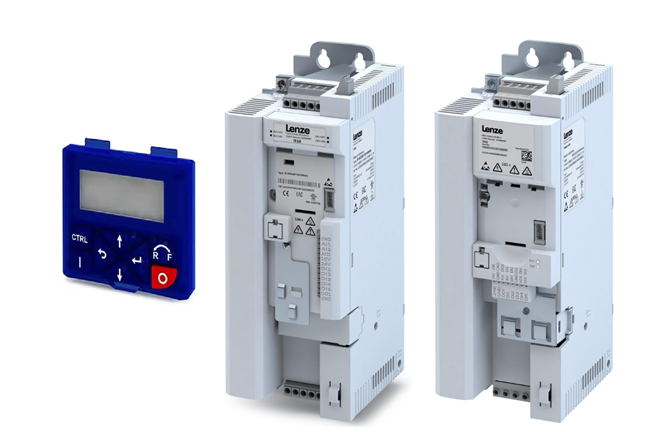
The Lenze i510 and i550 frequency inverters are used in a wide range of industrial motor control applications. When a drive reports a fault or warning, understanding the displayed error code can help identify the cause and determine what needs to be checked before the equipment is returned to service.
Modern Drives & Controls supplies Lenze inverters and provides technical support to customers working with both current and older drive systems.
This guide covers common Lenze i510 and i550 fault codes, what they mean, possible causes and the checks recommended by the manufacturer.
Common Lenze i510 and i550 fault codes
The following codes appear in Lenze operating instructions for relevant i510 and i550 models. The exact codes and available diagnostic information can vary with the drive variant and firmware, so always consult the operating instructions for your particular inverter.
2250 – Continuous overcurrent
What it means: The drive has detected continuous overcurrent within the device.
Possible causes and checks:
-
Check the motor and associated wiring for short circuits.
-
Inspect the brake resistor and its wiring, where fitted.
-
Check that the motor is connected correctly in star or delta, as required.
-
Verify the motor data entered into the inverter.
2320 – Short circuit or earth leakage on the motor side
What it means: The drive has detected a short circuit or earth leakage condition on the motor side.
Possible causes and checks:
-
Inspect the motor cable and connections for damage.
-
Check the motor cable length against the drive manufacturer's recommendations.
-
Investigate possible insulation faults in the motor or cable.
Do not continue resetting the drive without investigating the cause.
2340 – Internal short circuit
What it means: The drive has detected a short-circuit condition classified as internal to the device.
What to check: The manufacturer recommends checking the motor cable for a short circuit. If the fault persists after the external circuit has been checked, further investigation by a suitably qualified person may be required.
2350 – Motor or drive thermal overload
What it means: The drive has detected excessive thermal utilisation, commonly described as an I²t overload.
Possible causes and checks:
-
Check that the inverter is correctly sized for the application.
-
Check the driven machinery for excessive mechanical load.
-
Verify the motor data and relevant drive settings.
-
Investigate whether the machine is repeatedly operating under excessive load.
2382 – Drive utilisation too high
What it means: The drive's calculated utilisation has exceeded the permitted level.
What to check: Confirm that the inverter is correctly rated for the motor and application. Review the load profile and operating conditions to establish whether the drive is being asked to provide more current or overload capability than it can support.
2383 – Drive utilisation warning
What it means: The drive is warning that its calculated utilisation is too high.
This is an opportunity to investigate the operating conditions before the situation develops into a fault. Check the application loading and drive sizing, particularly if the warning occurs repeatedly.
3120 – Mains phase fault
What it means: The inverter has detected a mains supply phase fault.
What to check:
-
Check the incoming mains connections.
-
Check the relevant supply fuses.
-
Have the supply voltage and phase conditions checked by a suitably qualified electrician.
3210 – DC bus overvoltage
What it means: The DC bus voltage inside the inverter has exceeded its permitted level.
Possible causes and checks:
-
Check that the incoming supply voltage is correct.
-
Review the machine's acceleration and deceleration profile.
-
Investigate whether the load is generating excessive energy during deceleration.
-
Check the braking arrangement and associated drive settings, where applicable.
Applications involving high inertia or frequent stopping may require particular attention to braking energy management.
3211 – DC bus overvoltage warning
What it means: The inverter has detected a DC bus overvoltage condition at warning level.
Check the supply voltage, braking energy management and machine operating profile. If the warning occurs during deceleration, the braking arrangement and deceleration settings may need to be reviewed.
3220 – DC bus undervoltage
What it means: The DC bus voltage has fallen below the permitted level.
What to check:
-
Check the incoming mains voltage.
-
Inspect the relevant supply fuses.
-
Check the supply connections and mains conditions.
-
Investigate any supply interruptions or voltage dips.
3221 – DC bus undervoltage warning
What it means: The inverter is warning that the DC bus voltage is too low.
Check the supply voltage, fuses and mains settings. If the warning is intermittent, investigate whether the incoming supply is becoming unstable under load.
3222 – DC bus voltage too low for switch-on
What it means: The DC bus voltage is insufficient for the inverter to switch on.
Check the incoming supply, relevant fuses and mains settings before attempting to start the drive again.
4210 – Power section overtemperature
What it means: The inverter's power section has reached an excessive temperature.
Possible causes and checks:
-
Check that the drive has adequate cooling and ventilation.
-
Inspect ventilation slots and clean away accumulated dust where safe to do so.
-
Check the cooling fan, if fitted.
-
Verify the operating environment and drive loading.
-
Review the switching frequency against the manufacturer's recommendations.
If the fault continues despite adequate cooling and correct loading, further investigation may be necessary.
4281 – Heatsink fan warning
What it means: The inverter has detected a heatsink fan warning on applicable models.
Check the fan and ventilation openings for obstruction or contamination. If the fan is damaged or not operating correctly, follow the manufacturer's instructions for inspection and replacement.
4310 – Motor overtemperature
What it means: The drive has detected a motor overtemperature condition.
What to check:
-
Check the motor loading and inverter sizing.
-
Inspect the motor temperature sensor and associated wiring, where fitted.
-
Investigate the motor's cooling arrangements and operating conditions.
-
Check whether the machine is being operated beyond its intended duty.
Do not assume that the motor itself needs replacing until the cause has been established.
5112 – 24 V supply warning
What it means: The inverter has detected a critical condition affecting its 24 V supply on applicable models.
Check the relevant external auxiliary supply, where used, and investigate the incoming supply conditions in accordance with the drive's operating instructions.
5180 – 24 V supply overload
What it means: The inverter has detected an overload on its 24 V supply.
Check the connected 24 V loads and digital outputs for overloads or earth faults. Any external wiring should be inspected safely before the drive is returned to operation.
Faults, warnings and recurring errors
Not every diagnostic message means the inverter has failed.
A warning may indicate that a condition is approaching a limit, while a fault may cause the drive to stop or prevent it from operating. Lenze documentation also uses classifications such as trouble for certain conditions, including DC bus undervoltage.
The distinction matters because the appropriate response depends on the message displayed and the condition that caused it.
If a fault repeatedly returns, investigate the underlying cause rather than simply resetting the inverter. Supply problems, motor cable faults, incorrect motor data, excessive mechanical loading and inadequate cooling can all contribute to drive problems.
Can a Lenze i510 or i550 fault be reset?
Some faults can be reset once the cause has been eliminated and any required blocking time has expired. The available reset method depends on the drive configuration and control arrangement.
Before resetting a fault:
-
Record the displayed code and any relevant diagnostic information.
-
Identify and investigate the likely cause.
-
Isolate the equipment and follow the appropriate electrical safety procedures before inspecting wiring or components.
-
Refer to the operating instructions for the correct reset procedure.
-
If the fault returns, investigate further rather than repeatedly resetting the drive.
Never work on live electrical equipment unless specifically qualified and authorised to do so, and follow the manufacturer's safety instructions.
Need help with a Lenze i510 or i550 inverter?
If a Lenze i510 or i550 inverter is displaying a fault that you cannot identify, or a fault continues to return after the initial checks, Modern Drives & Controls may be able to help.
As a Lenze distributor and specialist supplier, we can assist with inverter selection, replacement enquiries and technical guidance for industrial drive applications.
When contacting us, please provide the inverter's full type designation, the displayed fault code, the motor details and a brief description of what the machine was doing when the fault occurred. A photograph of the drive nameplate and display can also be useful.
Contact Modern Drives & Controls to discuss your Lenze inverter requirements.
You can also explore our Lenze i500 inverter selection guide for further information about choosing a suitable drive for your application.