
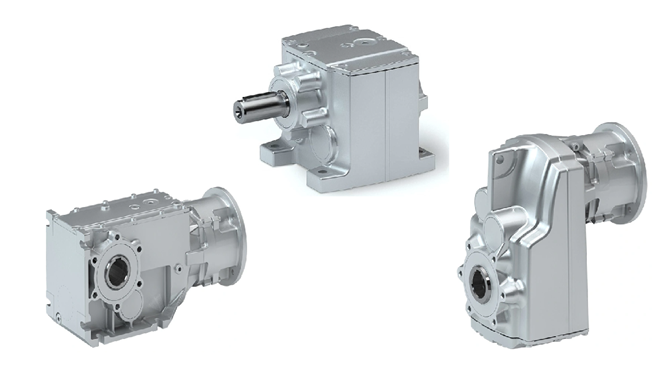
When designing a new machine, selecting the correct geared motor is an important part of the overall engineering process.
The geared motor needs to provide the required output speed and torque while also fitting the machine mechanically and working correctly with the chosen control system.
Lenze’s G500 range provides a modern solution for a wide variety of industrial applications, including conveyors, material handling equipment, packaging machinery, processing equipment and automated production systems.
The range includes different geared-motor configurations, including the Lenze g500B, g500H and g500S.
However, choosing the correct unit is not simply a case of selecting the nearest motor power rating. The gearbox arrangement, reduction ratio, output torque, mounting position, braking requirements and control method all need to be considered.
Why geared-motor selection matters
A geared motor combines an electric motor with a gearbox to provide the speed and torque required by the driven machine.
The motor may operate at a relatively high speed, while the gearbox reduces that speed to a more suitable output speed. At the same time, the gearbox increases the available output torque.
Selecting the wrong geared motor can result in:
- The machine running too quickly or too slowly
- Insufficient starting torque
- Excessive mechanical loading
- Unnecessary energy consumption
- Poor acceleration or stopping performance
- Increased wear on mechanical components
- Problems with mounting or installation
- An unsuitable brake or encoder arrangement
- Difficulty integrating the motor with the inverter or control system
For this reason, the geared motor should be selected around the requirements of the machine rather than simply choosing a unit based on motor power alone.
Introducing the Lenze G500 range
The Lenze G500 range is designed for modern machine-building applications where reliable mechanical drive performance, compact installation and straightforward integration are important.
The range includes different gearbox configurations to suit different machine layouts and operating requirements.
The three configurations considered in this article are:
- Lenze g500B
- Lenze g500H
- Lenze g500S
Each configuration should be considered in relation to the actual machine design, the available installation space and the required output characteristics.
The correct choice will depend on the application, rather than one model being suitable for every type of machine.
Lenze g500B geared motors
The Lenze g500B is one of the geared-motor options within the G500 range.
When considering a g500B for a new machine, the main factors to assess include:
- Required output speed
- Required output torque
- Available mounting space
- Gearbox orientation
- Output shaft or flange arrangement
- Motor power
- Duty cycle
- Brake and encoder requirements
- Compatibility with the selected inverter
The g500B may be suitable where its gearbox arrangement and mechanical dimensions match the requirements of the machine.
However, the final selection should be based on the actual load and installation details. A geared motor that appears suitable from its power rating may not be correct if the output speed, torque or mounting arrangement is unsuitable.
Lenze g500H geared motors
The Lenze g500H provides another gearbox configuration within the G500 family.
When selecting a g500H, particular attention should be paid to the mechanical arrangement of the machine.
This includes:
- How the geared motor will be mounted
- The direction of the output shaft
- The required output speed
- The required output torque
- The available installation space
- The connection between the gearbox and the driven machine
- The expected operating duty
- Any brake or feedback requirements
The gearbox configuration can have a major effect on how easily the motor can be installed into the machine.
For a new design, it is therefore worth confirming the gearbox arrangement and mounting details before the machine structure is finalised.
Lenze g500S geared motors
The Lenze g500S is another option within the G500 geared-motor range.
As with the g500B and g500H, the g500S should be selected according to the machine’s actual operating requirements.
Important considerations include:
- The required output speed
- The required torque at the machine shaft
- The type of mechanical load
- The available space
- The mounting arrangement
- The shaft or flange connection
- The frequency of starting and stopping
- The need for a brake
- The control method and inverter arrangement
The most suitable configuration will depend on the layout of the machine and the way the geared motor is expected to operate.
Selecting the correct gearbox configuration at the design stage can help avoid unnecessary mechanical changes later.
How to select the correct geared motor
Before selecting a Lenze G500 geared motor, the following information should be established.
1. Required output speed
The first question is:
How fast does the machine output shaft need to rotate?
This may be specified in revolutions per minute, or rpm.
For example, a conveyor roller, screw conveyor or processing shaft may need to rotate at a relatively low speed, even though the electric motor itself operates at a much higher speed.
The gearbox reduction ratio is used to achieve the required output speed.
Selecting the wrong ratio could cause the machine to run too fast, too slowly or outside its intended operating range.
2. Required output torque
The next important consideration is the torque required at the gearbox output shaft.
Torque is the turning force available to drive the machine.
The required torque depends on factors such as:
- Load weight
- Friction
- Acceleration
- Inclines
- Mechanical resistance
- Shock loading
- Starting conditions
- Operating speed
- Duty cycle
A machine may require considerably more torque during starting than it requires once it is running.
This is particularly important for applications involving heavy loads, frequent starts and stops or high levels of mechanical resistance.
3. Motor power
Motor power is normally specified in kilowatts.
Although power is important, it should not be used as the only selection factor. Two geared motors with similar power ratings may have different output speeds, torque ratings and mechanical arrangements.
A basic relationship between power, torque and speed is:
[
P = \frac{T \times n}{9550}
]
Where:
- (P) = power in kW
- (T) = torque in Nm
- (n) = speed in rpm
This relationship can help provide an initial understanding of the required motor and gearbox performance.
In practice, the final selection should also consider acceleration, service factor, duty cycle, shock loads and the characteristics of the driven machine.
Understanding gearbox ratio
The gearbox ratio determines how the motor speed is reduced before reaching the machine output shaft.
For example, a motor may operate at approximately 1,500 rpm, while the machine may require an output speed of only 50 rpm.
The gearbox must therefore provide the necessary reduction.
The gearbox ratio affects:
- Output speed
- Available output torque
- Acceleration
- Machine performance
- Overall drive selection
A higher reduction ratio generally produces a lower output speed and higher available output torque, subject to the gearbox and motor ratings.
The correct ratio should be selected from the machine’s required output speed rather than simply choosing a standard ratio.
Consider the type of machine load
Different machines place different demands on the geared motor.
Conveyor applications
Conveyors may require:
- High starting torque
- Controlled acceleration
- Reliable continuous operation
- Suitable output speed
- A brake in some applications
- Resistance to frequent starting and stopping
The conveyor load, belt speed, roller diameter and incline should all be considered.
Packaging machinery
Packaging equipment may require:
- Frequent starts and stops
- Accurate speed control
- Rapid acceleration
- Compact installation
- Brake or encoder options
- Integration with a machine control system
The duty cycle is especially important because a motor that is suitable for continuous running may not be suitable for frequent cycling.
Material handling equipment
Material handling machinery may involve:
- Heavy loads
- High starting torque
- Shock loading
- Inclines or lifting movements
- Holding requirements
- Mechanical safety considerations
Where a load must be held in position, the brake and the overall machine safety design must be considered carefully.
Processing equipment
Processing machinery may require:
- Consistent output speed
- Continuous operation
- High torque at low speed
- Specific gearbox arrangements
- Protection from the operating environment
The characteristics of the material being processed can affect the required torque and duty cycle.
Brake requirements
Some applications require a brake fitted to the geared motor.
A brake may be needed where the machine must:
- Stop quickly
- Hold a load when the motor is not running
- Prevent unwanted movement
- Stop repeatedly during normal operation
- Maintain a position during a machine cycle
The brake should be selected according to the actual application requirements.
It is important to distinguish between a brake used for normal stopping and a brake required to hold a load safely. The machine’s risk assessment and safety design must determine the appropriate arrangement.
A brake should not be specified simply because it is available. It should be selected because the application requires it.
Encoder and feedback requirements
Some machines require feedback from the motor or gearbox.
An encoder may be needed for:
- Accurate speed control
- Positioning
- Synchronisation
- Registration
- Repeatable machine movements
- Closed-loop control
Other applications may only require basic speed control from an inverter.
The encoder requirement should therefore be established before the geared motor is ordered, as it may affect the motor configuration, cabling and control system.
Integrating the geared motor with a Lenze inverter
The geared motor and inverter should be considered together.
The inverter needs to be suitable for:
- The motor voltage
- Motor current
- Motor power
- Required control method
- Speed range
- Acceleration and deceleration requirements
- Braking requirements
- Feedback requirements
- Communication system
For a new machine, it is useful to confirm the motor and inverter combination at the design stage.
This can help ensure that the drive system provides the required performance without unnecessary oversizing or compatibility problems.
The inverter settings will also need to be configured correctly for the selected motor.
Depending on the application, this may include:
- Motor voltage
- Motor current
- Motor frequency
- Motor speed
- Acceleration time
- Deceleration time
- Minimum and maximum speed
- Brake control
- Feedback settings
- Protection parameters
Mechanical installation considerations
The geared motor must also fit the machine mechanically.
Before finalising the design, check:
- Overall dimensions
- Mounting position
- Mounting holes
- Output shaft or flange
- Shaft diameter
- Keyway or connection method
- Available clearance
- Cable access
- Maintenance access
- Cooling and ventilation
- Guarding requirements
A geared motor may be electrically suitable but difficult to install if the mechanical arrangement has not been considered.
For this reason, it is often useful to review the motor dimensions and gearbox drawings before manufacturing the machine frame or mounting brackets.
Do not select only by motor size
One of the most common mistakes is choosing a geared motor based only on the motor’s kilowatt rating.
The following units may all have the same motor power but different performance characteristics:
- Different gearbox ratios
- Different output speeds
- Different output torque
- Different mounting arrangements
- Different shaft configurations
- Different brake options
- Different encoder options
The correct selection must therefore consider the complete geared-motor specification.
A smaller motor may be unsuitable if it cannot provide the required starting torque. Equally, an unnecessarily large motor may increase cost, space requirements and energy consumption without providing a practical benefit.
Information needed to select a Lenze G500 geared motor
To help select the correct Lenze G500 solution, it is useful to provide as much of the following information as possible:
- Description of the machine
- Description of the driven load
- Required output speed in rpm
- Required torque, if known
- Motor supply voltage
- Required motor power, if already established
- Continuous or intermittent operation
- Number of starts and stops per hour
- Acceleration and stopping requirements
- Inclines or lifting movements
- Shock loading
- Required gearbox mounting arrangement
- Output shaft or flange requirements
- Brake requirement
- Encoder or feedback requirement
- Inverter make and model
- Control system details
- Available installation space
- Machine drawings or layout drawings
A photograph, sketch or drawing of the proposed installation can also be helpful.
If the torque requirement is not known, details of the load, speed, pulley or roller diameter, acceleration time and operating conditions may allow the requirement to be calculated.
Designing the drive system early
Selecting the geared motor early in the machine design process can help avoid problems later.
It allows the designer to confirm:
- The gearbox will fit the machine
- The output shaft matches the driven equipment
- The motor and inverter are compatible
- The required torque is available
- The brake and encoder options are correct
- The mounting arrangement is suitable
- The control panel can accommodate the required equipment
This is particularly important where the machine has limited space or where the geared motor is connected directly to a custom mechanical assembly.
How Modern Drives & Controls can help
Modern Drives & Controls can help with the selection of Lenze geared motors and associated drive equipment for new machine applications.
We can help review the application requirements and identify the information needed to select a suitable solution from the Lenze G500 range, including the:
- Lenze g500B
- Lenze g500H
- Lenze g500S
We can also help consider the wider drive system, including:
- Motor and gearbox selection
- Inverter compatibility
- Braking requirements
- Encoder and feedback requirements
- Control panel integration
- Electrical connections
- Application-specific operating requirements
The more information available about the machine and its load, the more accurately the geared motor can be selected.
Conclusion
Selecting a Lenze G500 geared motor for a new machine is not simply a matter of choosing a motor power rating.
The gearbox configuration, reduction ratio, output speed, output torque, mounting arrangement, duty cycle, brake requirements and control system all need to be considered together.
The Lenze g500B, g500H and g500S provide different options for new machine applications, but the correct choice depends on the actual mechanical and electrical requirements.
By selecting the geared motor early and considering the complete drive system, machine builders can reduce installation problems and help ensure reliable performance.
If you are designing a new machine and need help selecting a Lenze G500 geared motor, contact Modern Drives & Controls to discuss your application.